
App development
Artificial intelligence in mobile apps
Artificial intelligence (AI) is becoming a key factor in the development of modern mobile apps. It not only improves the user experience, but also makes automation, personalization and more effective communication possible. In this article we will look at the most current uses of AI, supported by real data and examples from the industry.
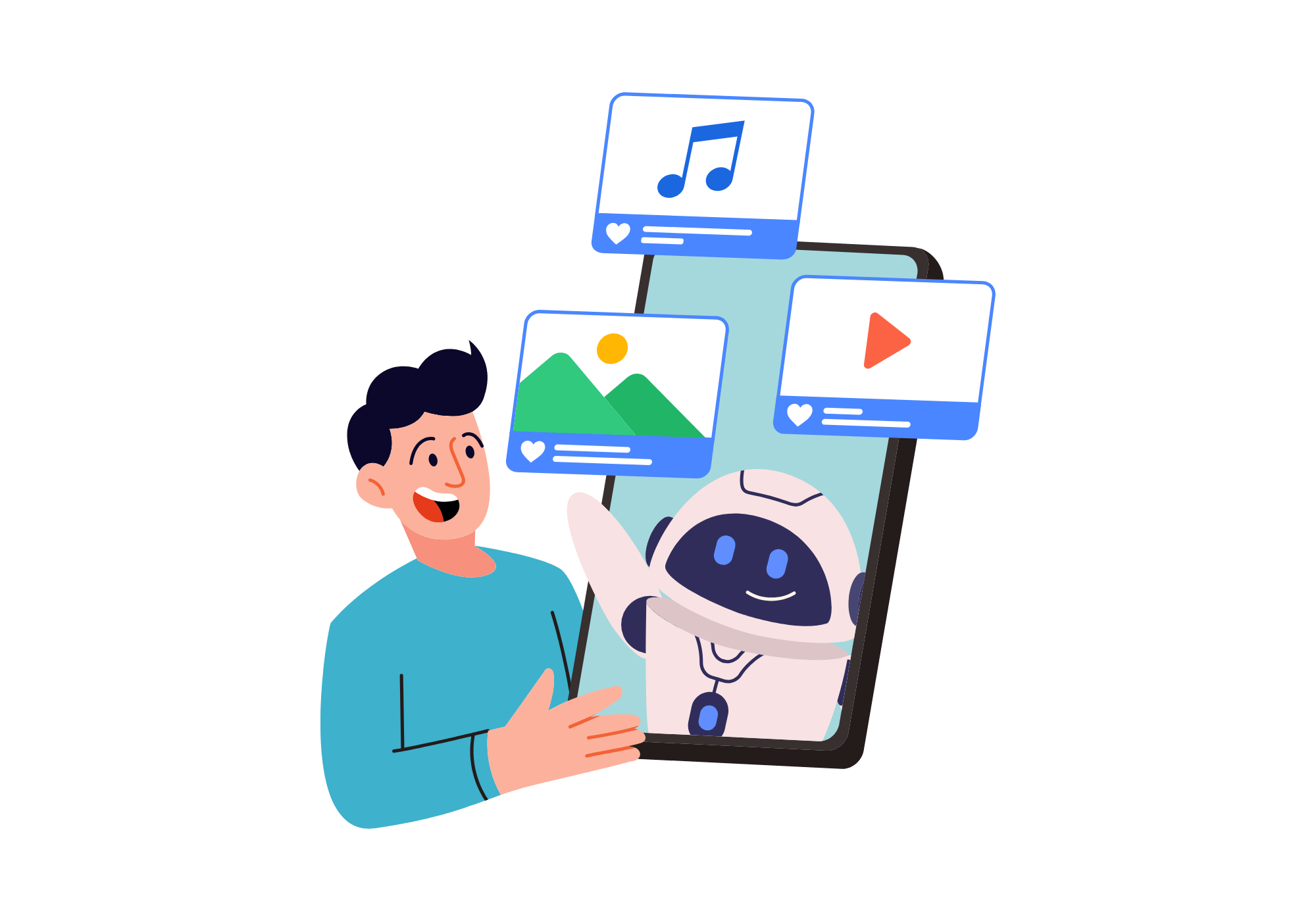
Artificial intelligence (AI) is becoming a key factor in the development of modern mobile apps. It not only improves the user experience, but also makes automation, personalization and more effective communication possible. In this article we will look at the most current uses of AI, supported by real data and examples from the industry.
Chatbots based on artificial intelligence
The chatbot market is developing at an exceptionally dynamic pace. In 2024 it was valued at 7.76 billion dollars, and it is expected to reach 27.29 billion dollars by 2030, with annual growth of 23.3%.
AI chatbots are changing the way mobile apps provide service in real time. Apps such as Woebot and Replika use natural language processing (NLP) and sentiment analysis to create conversations close to human ones. They offer personalized answers, adapt to the user’s behavior and even provide emotional support.
For the business this means 24/7 service, a better user experience and significantly higher engagement and retention of customers.
Voice assistants
According to data from Statista, in 2024 Amazon Alexa dominated the voice assistant market in the US with a 61% share, followed by Google Assistant with 23% and Siri with 16%.
Voice assistants use machine learning and speech recognition to interpret commands and carry out tasks without the need for physical interaction. They can control devices, make calls and set reminders.
With every interaction they improve their understanding of the context, which makes them increasingly accurate and useful in everyday life.
Personalized content recommendations
Personalization is among the strongest sides of AI. In 2024 Netflix reported that around 80% of the content watched on the platform comes from recommendations.
Platforms such as Netflix and Spotify use machine learning algorithms that analyze users’ behavior, preferences and habits. This allows them to offer content that is as relevant as possible.
The result is higher engagement, a longer time in the app and a better user experience.
Recognition of images and faces
The market for facial recognition technologies is also seeing serious growth. In 2022 it was valued at 5.15 billion dollars and is expected to reach 15.84 billion dollars by 2030, with an average annual growth of 14.9%.
AI apps such as FaceApp use deep learning to recognize and analyze faces in real time. These technologies find wide use – from entertainment and photography to security and identification.
They are at the foundation of features such as unlocking a phone with a face and are used actively on social networks and in other digital services.
Predictive text and autocorrect
Features for predictive text and autocorrect are becoming more and more widespread. According to Credence Research, the market for AI writing software was valued at 1.81 billion dollars in 2024 and is expected to reach 3.64 billion dollars by 2032, with annual growth of 9.25%.
Grammarly, for example, has over 30 million active users a day and is used by over 500,000 teams around the world.
These tools use NLP and contextual learning to predict text, suggest words and correct errors in real time. They adapt to the user’s style and significantly improve the efficiency of communication.
Intelligent cameras and filters
Google Lens is used for over 20 billion searches every month, and 1 in 4 visual searches has a commercial purpose.
Apps such as Google Lens and Snapchat use computer vision and AI to recognize objects, text and faces. Google Lens makes it possible to scan and understand the real world through the camera, while Snapchat offers interactive filters in real time.
These technologies turn the camera into a powerful tool for search, analysis and creativity.
Translation in real time
AI translators remove language barriers and make global communication easier. The machine translation market was valued at 1.3 billion dollars in 2024 and is expected to reach 5 billion dollars by 2035.
Technologies such as Google Cloud Translation API use neural networks for real-time translation of more than 100 languages. They offer features such as voice translation, translation through the camera and live subtitles.
This makes them extremely useful in areas such as travel, education and healthcare, where speed and accuracy are of key importance.
Artificial intelligence is already an inseparable part of mobile apps. It not only improves their functionality, but also creates a more intuitive, personalized and effective user experience. As the technologies develop, the role of AI will continue to grow, becoming a main driver of digital innovation.